

Tokenization, Simply: What an Asset Event Registry Is—and Why It Matters More Than the Token
If the real asset is off-chain, the only way to keep tokens honest is to make every change an explicit, queryable “event” with a verifiable source. Otherwise, we end up trusting screenshots, spreadsheets, and whichever system was “last updated.
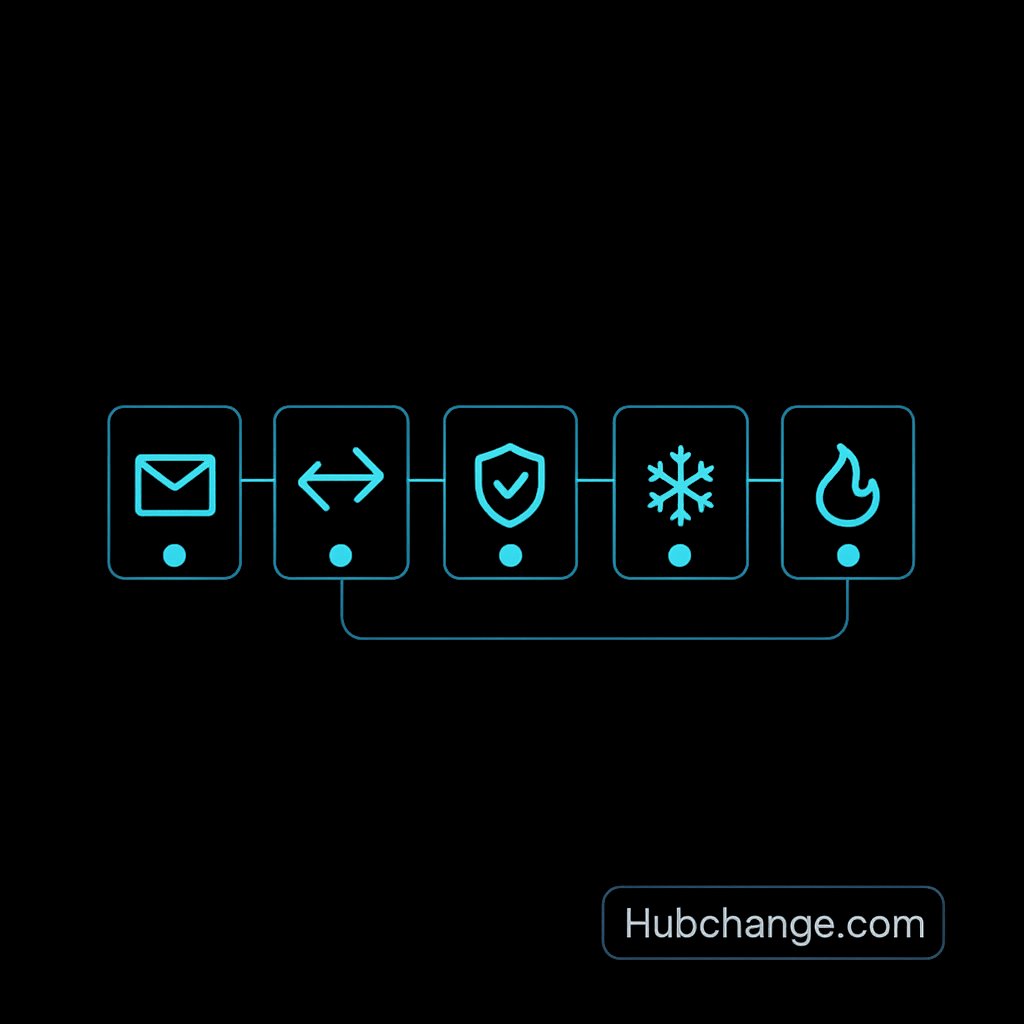

If the real asset is off-chain, the only way to keep tokens honest is to make every change an explicit, queryable “event” with a verifiable source. Otherwise, we end up trusting screenshots, spreadsheets, and whichever system was “last updated.”
This is why many RWA (real-world asset) projects succeed or fail on something that looks boring: the registry.
Introduction
In tokenization, it’s tempting to treat the token as the “source of truth.” In practice, operational trust comes from a clear asset event registry: a record of what happened to the asset over time, who authorized it, and what evidence supports it.
In this article we define what counts as an “event,” propose a minimum schema teams can implement without blockchain jargon, and show how a registry keeps issuance, transfers, and cancellations aligned with real-world changes.
The problem
Teams usually face the same set of issues as they scale:
- Disputes about status: Was the asset already pledged? Was it frozen? Was it redeemed and removed from circulation?
- Double-selling risk: If two systems can “transfer ownership,” it’s easy to create overlapping claims.
- Fragmented records: Outages, migrations, and new partners create multiple databases with slightly different histories.
When the underlying asset is off-chain (a warehouse-held commodity, a receivable, a piece of equipment, a fund unit, etc.), we need a durable way to prove changes without relying on one app’s current screen.
Core concept: an asset is a sequence of events
An asset event registry is a chronological log where each state change is recorded as a discrete event.
Instead of asking “Who owns the asset right now?” we can ask a stronger question: “What events occurred, in what order, with what authority and evidence, to reach the current state?”
This model is familiar outside tokenization too. Traditional operations often rely on logs and ledgers (shipment logs, custody logs, accounting journals). Tokenization benefits from the same discipline: the token moves, but the registry proves what that movement means for the underlying asset.
What counts as an “event” in the asset lifecycle?
For introductory RWA systems, we can think in a small set of event types:
- Issue (Create / Mint): The asset (or a claim on it) is created in the system because the real-world asset has been deposited, verified, or originated.
- Transfer: Ownership or control rights move from one party to another.
- Pledge (Collateral / Lien): The asset becomes encumbered. Ownership may remain, but transfer may be restricted.
- Freeze / Hold: A control event that temporarily blocks transfers (compliance, dispute, court order, operational incident).
- Burn / Cancel: Units are removed from circulation because the real-world claim is extinguished.
- Redemption: The asset is paid out, delivered, or otherwise settled in the real world, usually followed by burn/cancel in the registry.
Not every project needs all of these on day one. The key is that every operationally meaningful change becomes a registry event.
Minimum viable event-registry schema (fields + identifiers)
A registry does not need “blockchain language” to be robust. It needs unambiguous identifiers, consistent timestamps, clear parties, and a link to the evidence.
A practical minimum field set looks like this:
- event_id: Unique identifier for the event (UUID or equivalent).
- asset_id: Unique identifier for the asset or asset-series.
- event_type: Issue, Transfer, Pledge, Freeze, Burn, Redemption (or your controlled vocabulary).
- event_time: Timestamp in a defined standard (including timezone policy).
- effective_time (optional): If business effective time differs from record time.
- from_party / to_party: Parties involved, with roles (owner, custodian, issuer, pledgee, operator).
- quantity + unit: Amount affected (e.g., 1 unit, 0.25 ton, 10,000 rial claim units).
- resulting_state: The state after the event (e.g., Active, Pledged, Frozen, Burned).
- attestation_ref: Reference to what proves authorization and reality alignment (document ID, signed approval, custody receipt ID, internal ticket ID, etc.).
- previous_event_hash or previous_event_id: The link to the immediate prior event, to preserve ordering and prevent gaps.
- recorded_by + recorded_at: Who recorded it and when (system/service identity).
- notes (optional): Human-readable context, kept short.
Two design choices make this far more resilient:
- Controlled vocabularies (for event_type, roles, and states) so reporting is consistent.
- Strong identifiers so “asset A” cannot accidentally become “asset A (new)” during a migration.
How a registry makes controls enforceable (not just reportable)
Once events are first-class records, we can enforce rules that keep the token supply and real-world status aligned.
Examples of enforceable controls:
- Mint/burn reconciliation: Issue events must correspond to verified deposits or originations; burn events must correspond to verified redemption/termination. This prevents supply drift.
- Transfer constraints: A Transfer event can be rejected if the latest resulting_state is Pledged or Frozen.
- Audit-ready reporting: Regulators, auditors, and partners often ask “show me the chain of evidence.” With attestation_ref per event, the answer is not a manual hunt.
A token can reflect these rules on-chain or in an internal ledger. Either way, the registry provides the shared truth teams can query.
A practical framework
If we want a minimum implementation that survives outages and team changes, a simple sequence helps:
- Define the asset identity: Decide what asset_id represents (single item, batch, series) and how it maps to real-world documentation.
- Agree on event types and states: Keep the vocabulary small and stable.
- Define who can attest what: Identify which role can create Issue, Freeze, Burn, etc., and what evidence is required.
- Implement event ordering: Enforce previous_event_id linkage and prevent back-dating without explicit correction events.
- Make corrections explicit: Prefer “Correction/Amendment” events rather than silently editing history.
- Backups and exportability: Ensure the registry can be exported and replayed to rebuild current state.
This is not “extra bureaucracy.” It is what makes tokenization operationally safe once more than one team and one system is involved.
A simple example
Consider a hypothetical tokenized inventory claim for warehouse-held goods.
- Issue: 100 units are issued after a custody receipt is verified. The Issue event includes quantity, custodian role, and an attestation_ref to the receipt.
- Transfer: 20 units transfer to another buyer. The registry records from_party/to_party and links to the previous event.
- Pledge: The buyer pledges those 20 units as collateral. The resulting_state becomes Pledged, and the pledgee role is recorded.
- Freeze: A dispute arises about documentation. A Freeze event blocks transfers until resolved, with attestation_ref pointing to the dispute case.
- Burn/Cancel: After settlement in the real world, 20 units are canceled. The burn links to the redemption evidence.
Notice what we can answer at any point: how many units exist, which are transferable, which are encumbered, and which evidence supports each claim.
Risks and limitations
An event registry strengthens trust, but it works best with complementary layers:
- Evidence quality matters: attestation_ref is only as good as the underlying document and process. Clear custody and verification procedures strengthen the registry.
- Governance is required: We need defined roles, access controls, and an explicit dispute path for freezes and corrections.
- “Immutable” is not a magic word: Even with append-only logs, real-world mistakes happen. The point is to record corrections transparently rather than hide them.
- Time policy must be consistent: Decide whether event_time is system time, signed time, or a business-effective time, and keep it consistent.
As a broader context, Iranian banking and service delivery have been moving toward verifiable digital identity and non-presential workflows, which generally increases the value of auditable logs and registries in high-trust operations. We should treat that as a direction of travel, not as a specific approval of any token registry model.
Conclusion
When the asset is off-chain, the token is not the full story. The reliable story is an auditable sequence of events with clear identifiers, timestamps, parties, resulting state, and an evidence reference.
If we build the asset event registry first, token issuance and transfers become easier to keep honest, easier to audit, and easier to survive outages and migrations.
FAQ
1) Is the asset event registry the same as a blockchain ledger?
Not necessarily. A registry can live in a database, an internal ledger, or on-chain. What matters is the event model, the evidence references, and the governance.
2) Why do we need attestation_ref in every event?
Because disputes rarely happen about the token movement itself. They happen about whether the movement matches a real-world authorization, deposit, freeze order, or redemption.
3) Can we edit an event if a mistake happens?
Stronger registries avoid silent edits. They add a correction event that references the original event, explains the change, and preserves the audit trail.